Lunory-Sleek & Feature-Focused
VetraShortEntertainment
1.512.00 Reviews
- Version
- 1.1.1
- Installs
- 10.00K
- Age Rating
- Everyone
Screenshots
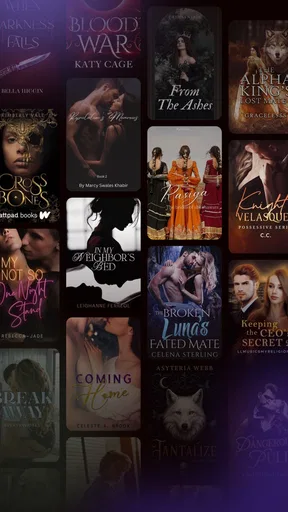
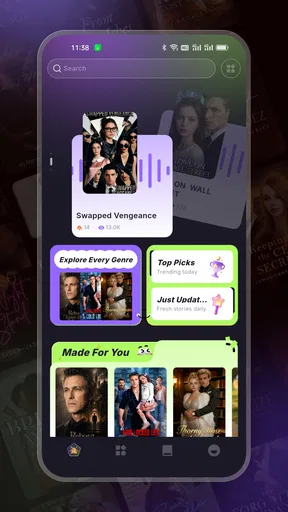
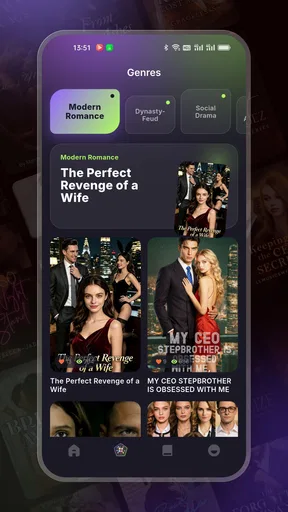
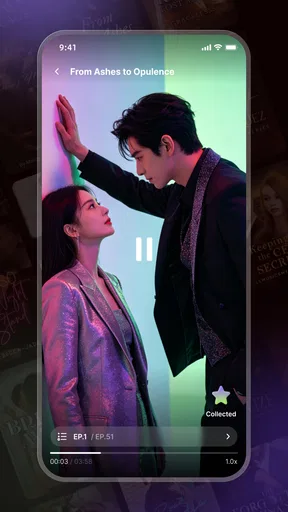
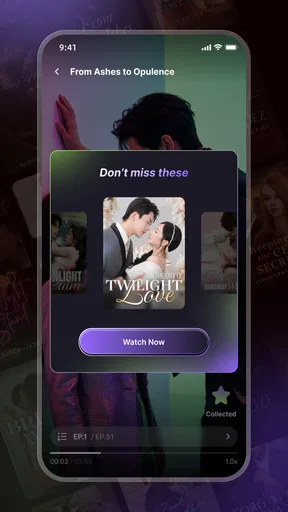
Our Review of Lunory-Sleek & Feature-Focused
 Analysis by Appyee
I spent time with Lunory as an entertainment app built around short-form story discovery, and my first impression was that it is trying to make choosing something to watch feel lighter. Instead of presenting itself as a broad, all-purpose media service, it points users toward captivating stories, fresh episodes, and selected recommendations. That narrow promise is appealing when I want a quick decision rather than another long session of scrolling through an enormous catalog.
At the same time, Lunory is not an app I would recommend blindly. Its current average rating is 1.5 from around forty-five ratings, which is a serious warning sign for anyone expecting a polished, dependable experience from the moment they install it. The app has reached over ten thousand installs, so it is not completely unknown, but its public reception is clearly mixed in a negative direction. My view is therefore cautious: Lunory may suit someone curious about its particular story format, but it needs to earn trust through actual use.
How Lunory approaches short-form entertainment
The app comes from VetraShort and sits in the entertainment category. Its store short description is simply “Lunory,” while the longer summary focuses on stories, new episodes, and curated picks. That wording gives a useful clue about the intended experience: this is less about managing a personal media library and more about opening the app to find something ready to consume.
I see the strongest appeal in the combination of discovery and continuation. A new user can browse for a story that catches their attention, then return for later episodes instead of committing immediately to a full-length film or a long series. That makes the app suitable for small breaks, especially when I have enough time for a few scenes but not enough patience for a conventional streaming session.
The short-episode approach also changes how I judge the app. I do not expect the same depth of organization as a major streaming platform, nor would I use Lunory as my only source of entertainment. Its usefulness depends on whether the available stories match my mood and whether the presentation makes it easy to move from one appealing pick to the next. For me, the quality of that discovery loop matters more than having a huge number of choices.
What the free starting point really means
Lunory is free to install and offers free access at the entry point, which removes the biggest barrier to trying it. That is important here because the app’s low average rating makes paying before experiencing it a poor decision. I would install it first, explore its available stories, and only then decide whether its paid elements have any relevance to my habits.
There are in-app purchases ranging from $4.89 to $299.99 per item. Those figures create a very wide gap between a relatively modest purchase and the most expensive option, so I would treat every purchase screen carefully rather than assuming that “free” means the entire experience is cost-free. The practical value of Lunory cannot be judged only by the download price; it depends on how much of the story experience remains usable without spending and whether paid access is optional for the episodes I actually want.
I would also avoid making a purchase simply to remove frustration. If an episode is interesting enough to continue, I would first check exactly what the payment unlocks and whether it is a one-time purchase or part of a broader spending pattern. The listed price range is enough to show that the financial commitment can vary dramatically. Anyone sharing a device with children should be especially deliberate, even though the content rating is Everyone.
Where the app can deliver value without a large time commitment
The clearest value is convenience. Lunory is aimed at the moment when I want a story now, not after comparing dozens of services, reading reviews, and building a watchlist. Curated picks can be useful when my attention is limited, and fresh episodes give the app a reason to become part of a routine rather than a one-time curiosity.
A realistic example would be a commute or a lunch break. I might open the app with roughly ten minutes available, choose a story from the recommendations, and stop when the break ends. If the episode structure is well suited to that kind of interruption, Lunory could feel more practical than a traditional streaming app, where starting a film or a long episode can create an awkward commitment.
Another useful situation is mood-based browsing. If I do not know what I want but still want something narrative, a focused selection can reduce decision fatigue. The trade-off is that curation only helps when the selected material feels relevant. If the recommendations repeatedly miss my interests, the supposed advantage becomes another layer between me and the content.
For that reason, I would judge Lunory after several different visits rather than after one opening session. I would look for whether the app helps me discover stories I would not have chosen myself, whether returning to an unfinished episode is straightforward, and whether new episodes provide a meaningful reason to come back. Those are more useful tests than simply counting how many titles appear on the first screen.
Small habits that make the experience easier to evaluate
My first tip is to use the free portion as a trial period, not as a promise of unlimited value. I would sample more than one story and avoid spending until I understand the rhythm of the app. A single appealing episode can make almost any story platform seem promising; the better test is whether the second and third choices are also worth my time.
My second tip is to separate interest in a story from interest in the app itself. If one series keeps me watching, that does not automatically mean Lunory is the best place for all my entertainment. I would ask whether the app’s curated discovery is saving me time often enough to justify returning, especially when other services may offer broader catalogs or more familiar viewing tools.
My third tip is to pay attention to interruption points. Short-form entertainment works best when I can leave and return without losing track of the story. I would use Lunory during naturally bounded breaks first, then see whether its continuation flow fits longer sessions. This helps reveal whether the app is genuinely flexible or merely divided into short pieces.
A fourth practical check is to review the purchase prompt before confirming anything. The lowest listed item price is $4.89, while the highest reaches $299.99, so the difference between a casual unlock and a substantial commitment is enormous. I would never assume that a prominent button represents the only or cheapest route forward. The safest approach is to read the wording, identify the exact content being offered, and stop if the value is unclear.
The friction behind the attractive concept
The biggest concern is the public rating. An average of 1.5 from around forty-five ratings is not a minor blemish, particularly for an app whose main job is to provide a smooth entertainment experience. A low score can reflect many different problems, but it still tells me that a noticeable group of users felt disappointed enough to rate it poorly. I would not dismiss that signal simply because the concept sounds convenient.
There is also a value risk created by the purchase range. Free installation is helpful, but a story app can become expensive if continuing the narratives requires repeated or high-cost unlocks. I cannot treat the free entry point as strong value unless the unpaid experience gives me enough room to decide whether the paid content is worthwhile. This is where Lunory needs to be judged by actual access, not by the word “free” alone.
The Everyone rating makes Lunory broadly approachable, but it does not tell me whether the storytelling style will suit every age or taste. A general age label is not a substitute for personal judgment. Parents may still want to look at the app together with younger users, while adults who prefer complex, long-form storytelling may find the format too lightweight even if the content itself is accessible.
The app is also relatively early in its life, with version 1.1.1 released on June 21, 2026. That version detail matters because a young product can still be finding its shape. I am willing to allow room for refinement, but I would not pay a premium based on the assumption that future improvements are guaranteed. I judge the version available now, and I expect the current experience to justify current spending.
How it compares with familiar alternatives
Compared with a major video streaming service, Lunory appears more focused on quick story discovery and episodic viewing. A large streaming platform is usually the safer choice when I want established catalog depth, mature account tools, or a broad range of viewing formats. Lunory is more interesting when I want a compact narrative and curated suggestions without spending a long time searching.
Compared with social video feeds, Lunory’s story-centered approach may be better for someone who wants a sense of progression rather than an endless sequence of unrelated clips. Social feeds are often stronger for spontaneous variety and rapid entertainment, but they can also make it difficult to follow a continuing narrative. Lunory’s appeal depends on whether its episodes create enough momentum to keep me returning.
Compared with reading apps, Lunory is the more natural option for users who prefer watching or quickly consuming visual storytelling. Reading platforms may offer deeper control over pace and often suit people who want to spend longer with a story. I would choose Lunory for convenience and immediacy, not for the richest possible literary experience.
The important trade-off is specialization. Lunory may reduce the effort required to find a short story, but it cannot automatically replace every other entertainment service. If I already have a platform that reliably satisfies my viewing habits, Lunory needs to offer a noticeably better discovery experience or a type of episode I cannot easily find elsewhere.
Who is most likely to get value from it
I think Lunory is best suited to curious viewers who enjoy serialized stories but dislike committing to long sessions. It may also work for people who want curated entertainment during commutes, breaks, or quiet moments before bed. The free starting point makes experimentation reasonable, provided the user treats purchases cautiously.
It could be a good fit for someone who often says, “I want to watch something, but I do not know what.” The curated-pick angle addresses that exact problem. It is also potentially useful for users who enjoy checking back for fresh episodes and prefer an evolving selection over a fixed library.
I would be more hesitant to recommend it to users who need a consistently polished service, dislike purchase prompts, or expect a large and dependable catalog. The rating is too low for me to overlook those concerns. I would also suggest skipping it if you are looking for a single replacement for a full streaming subscription, because Lunory’s focused format is unlikely to cover every entertainment need.
For families, the Everyone rating is reassuring as a broad classification, but I would still make the first exploration a shared one. That approach helps confirm that the stories fit the household and also prevents accidental spending. The age label makes the app accessible; it does not remove the need for supervision around purchases or personal preferences.
My buying decision after testing the value proposition
My verdict is to try Lunory for free, but not to commit money quickly. The concept has a sensible use case: short, discoverable stories for people who want entertainment in manageable pieces. Curated picks and fresh episodes could make it more convenient than a broad service when I am short on time or attention.
However, the 1.5 average rating is too concerning for an enthusiastic recommendation, and the purchase range is too broad to treat paid access casually. I would only consider spending after finding several stories I genuinely want to continue and understanding exactly what the purchase provides. If the free experience feels thin or the payment path is unclear, I would stop there.
In everyday terms, Lunory is a low-risk download but a high-caution purchase. Its free entry makes curiosity reasonable, while its public reception and possible spending levels demand restraint. I would recommend it to a patient short-form story fan who is willing to test the app carefully. I would tell anyone seeking reliability, extensive choice, or predictable entertainment value to stay with a more established alternative.
That leaves Lunory in a narrow but understandable position. It is not a universal entertainment solution, and I would not present it as one. For the right viewer, its focused story format may fit neatly into spare moments. For everyone else, the sensible choice is to browse without spending, compare the experience with the services already on the phone, and uninstall if the app does not quickly prove that its convenience is worth the trade-offs.
Verdict
Strengths of Lunory-Sleek & Feature-Focused
- Clean, modern interface that feels polished and easy to navigate.
- Feature-focused design keeps the experience simple and free from clutter.
- Responsive performance makes everyday use feel smooth and reliable.
- Clear visual hierarchy helps users find important tools quickly.
- Minimalist styling gives the app a professional and consistent appearance.
Limitations of Lunory-Sleek & Feature-Focused
- Some advanced options may feel limited for power users.
- The sleek design can make certain controls less noticeable at first.
- Users seeking extensive customization may find the app restrictive.
- Feature descriptions may not provide enough guidance for new users.
- The streamlined experience may feel too basic for complex workflows.
Similar Picks in This Category
View All
Google Play Games
Google LLC3.9

Netflix
Netflix, Inc.4.8

YouTube Kids
Google LLC4.2

Disney+
Disney4.4

Prime Video
Amazon Mobile LLC4.7

Steam
Valve Corporation3.2
Frequently Asked Questions
What is Lunory-Sleek & Feature-Focused?
Lunory-Sleek & Feature-Focused is a modern app designed around a clean interface and a focused set of practical tools. Its main appeal is simplicity: menus are easy to understand, important functions are not buried under unnecessary screens, and the overall layout feels polished. It is intended for users who prefer a streamlined experience rather than an app overloaded with complicated options.
Is Lunory-Sleek & Feature-Focused easy to use for beginners?
Yes, the app is generally approachable for beginners. The uncluttered design makes it relatively easy to find the primary features without spending much time learning the interface. New users may still want to explore the settings and customization areas before relying on the app regularly, since some useful options can require a little experimentation. Overall, the learning curve is short and manageable.
What features does Lunory-Sleek & Feature-Focused offer?
Lunory-Sleek & Feature-Focused centers on usability, organization, and a visually consistent experience. Depending on the version and platform, users can expect access to its core tools, adjustable preferences, and a responsive interface built for everyday use. The app’s strongest feature is arguably how clearly everything is presented. However, users looking for extensive professional-level customization may find its feature set intentionally limited.
Is Lunory-Sleek & Feature-Focused free to download and use?
The availability of free features, premium tools, advertisements, or optional purchases may depend on the version distributed through Google Play or the Apple App Store. Before downloading, check the store listing carefully for pricing details, subscriptions, and in-app purchase information. The basic experience may be sufficient for casual users, but some advanced functions could require payment or may be restricted by the developer.
Is Lunory-Sleek & Feature-Focused safe and compatible with my device?
The safest way to install Lunory-Sleek & Feature-Focused is through its official Google Play or Apple App Store listing. Before installation, review the permissions requested, developer information, privacy policy, user reviews, and the minimum operating-system requirements. Compatibility can vary between Android and iOS devices, especially older models, so confirming the listed requirements first can help avoid performance or installation problems.
